
Introduction to 316/316L Stainless Steel Coil
316 and 316L stainless steel coils are among the most widely used molybdenum-bearing stainless steels in global industrial applications. Compared with standard 304 stainless steel, 316/316L offers significantly improved corrosion resistance, especially in chloride-rich and chemically aggressive environments.
Because of its excellent durability, weldability, and resistance to pitting corrosion, 316/316L stainless steel coil has become a preferred material for industries such as marine engineering, chemical processing, pharmaceutical manufacturing, food processing, and architectural fabrication.
For international buyers, understanding the differences between 316 and 316L stainless steel — including composition, performance, applications, and processing characteristics — is essential when selecting the correct material for long-term industrial use.
As an experienced stainless steel supplier from China, we provide ASTM, EN, and JIS standard 316/316L stainless steel coils for global export markets.
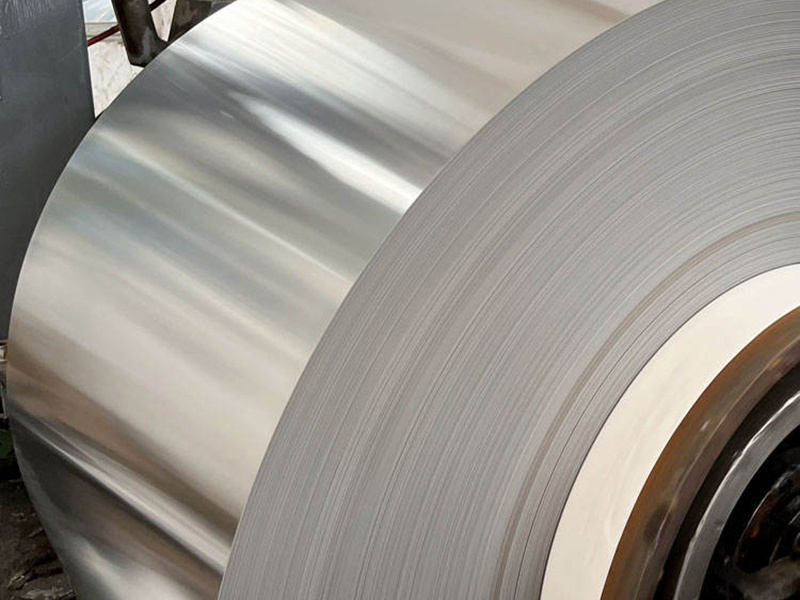
316/316L Stainless Steel Coil
What Makes 316/316L Stainless Steel Different?
The key advantage of 316 stainless steel is the addition of molybdenum (Mo), typically around 2–3%. This element dramatically improves resistance to:
- Chloride corrosion
- Saltwater exposure
- Acidic environments
- Pitting corrosion
- Crevice corrosion
This is why 316 stainless steel is commonly referred to as “marine grade stainless steel.”
316L stainless steel is the low-carbon version of 316 stainless steel. The lower carbon content minimizes carbide precipitation during welding, helping maintain corrosion resistance in welded areas.
In practical industrial applications:
- 316 is often selected for higher strength applications
- 316L is preferred for welding and heavy fabrication projects
Chemical Composition of 316 and 316L Stainless Steel Coil
| Element | 316 | 316L |
|---|---|---|
| Carbon (C) | ≤0.08% | ≤0.03% |
| Chromium (Cr) | 16.0–18.0% | 16.0–18.0% |
| Nickel (Ni) | 10.0–14.0% | 10.0–14.0% |
| Molybdenum (Mo) | 2.0–3.0% | 2.0–3.0% |
The reduced carbon content in 316L improves weld integrity and corrosion resistance after fabrication.
Mechanical Properties of 316/316L Stainless Steel Coil
| Property | 316/316L |
|---|---|
| Tensile Strength | ≥515 MPa |
| Yield Strength | ≥205 MPa |
| Elongation | ≥40% |
| Hardness | ≤95 HRB |
These mechanical properties make 316/316L suitable for both structural and precision industrial applications.
Corrosion Resistance Performance
Why Is 316 Stainless Steel Better for Corrosive Environments?
One of the main reasons buyers upgrade from 304 stainless steel to 316 stainless steel is corrosion resistance.
In environments containing chlorides — such as seawater, industrial chemicals, or coastal air — 304 stainless steel may eventually develop pitting corrosion.
316/316L stainless steel performs much better because molybdenum strengthens the passive oxide layer on the steel surface.
This makes 316 stainless steel particularly suitable for:
- Marine projects
- Coastal architecture
- Chemical storage tanks
- Pharmaceutical equipment
- Food-grade processing systems
316 vs 316L Stainless Steel Coil: Which One Should You Choose?
Many international buyers are unsure whether they should purchase 316 or 316L stainless steel coil.
The answer depends on the application.
Choose 316 Stainless Steel If:
- Higher mechanical strength is required
- Welding is limited
- The operating environment is not extremely corrosive after fabrication
Choose 316L Stainless Steel If:
- Extensive welding is involved
- Corrosion resistance after welding is critical
- The project involves pipelines, tanks, or pressure vessels
Today, many industrial buyers directly choose 316L because it provides better overall versatility.
316/316L Stainless Steel Coil Surface Finishes
Different surface finishes affect appearance, corrosion performance, and application suitability.
2B Finish
The most common industrial finish with a smooth, reflective surface suitable for fabrication and general industrial use.
BA Finish
Bright annealed finish with higher reflectivity, commonly used in decorative and food-grade applications.
No.1 Finish
Hot rolled rough surface suitable for heavy industrial equipment.
No.4 Finish
Brushed finish commonly used in kitchen equipment and architectural decoration.
Hairline (HL) Finish
Decorative linear texture widely used in elevators and interior panels.
Manufacturing Process of Stainless Steel Coil
The production process of 316/316L stainless steel coil typically includes:
- Melting and refining
- Continuous casting
- Hot rolling
- Annealing and pickling
- Cold rolling
- Surface finishing
- Slitting and cutting
- Quality inspection
- Packaging
Strict quality control during production is essential to ensure stable corrosion resistance and mechanical performance.
Common Applications of 316/316L Stainless Steel Coil
Marine Industry
316 stainless steel is widely used in offshore structures, ship components, seawater pipelines, and coastal facilities.
Chemical Industry
Excellent acid and chemical resistance makes 316/316L suitable for chemical tanks, reactors, and industrial piping systems.
Food Processing
316 stainless steel is frequently used in hygienic environments because of its cleanability and corrosion resistance.
Medical and Pharmaceutical Equipment
316L stainless steel is commonly used for medical-grade applications due to its stability and resistance to contamination.
Architectural Decoration
High-end commercial buildings often use 316 stainless steel for exterior panels in coastal cities.
Available Specifications
| Item | Range |
|---|---|
| Thickness | 0.3mm – 16mm |
| Width | 20mm – 2000mm |
| Coil ID | 508mm / 610mm |
| Standard | ASTM A240 / EN 10088 / JIS G4305 |
| Surface | 2B / BA / No.1 / No.4 / HL |
| Edge | Mill Edge / Slit Edge |
Custom specifications are available according to project requirements.
Export Packaging Standards
For international shipping, proper packaging is extremely important.
Our export packaging includes:
- Waterproof paper
- PVC protective film
- Wooden pallets
- Steel strip reinforcement
- Edge protection
This helps prevent moisture damage, scratches, and deformation during ocean transportation.
How to Choose a Reliable 316 Stainless Steel Coil Supplier
When sourcing stainless steel coils internationally, buyers should evaluate suppliers based on:
Material Certification
Ensure the supplier can provide:
- Mill Test Certificate (MTC)
- SGS inspection
- ASTM/EN/JIS compliance documents
Production Capability
A reliable supplier should support:
- Custom slitting
- Surface processing
- Stable inventory
- Fast delivery
Export Experience
Export packaging, documentation, and logistics coordination are essential for international buyers.
Stable Quality Control
Consistent thickness tolerance and surface quality are critical for industrial projects.
Frequently Asked Questions
Is 316 stainless steel food grade?
Yes. 316 stainless steel is widely used in food and beverage processing industries due to its corrosion resistance and hygienic properties.
Does 316 stainless steel rust in seawater?
316 stainless steel has excellent seawater resistance, but long-term exposure without maintenance may still cause surface staining under extreme conditions.
Is 316L more expensive than 304?
Yes. Because of the added molybdenum and nickel content, 316/316L stainless steel is generally more expensive than 304 stainless steel.
Can 316 stainless steel coil be polished?
Yes. 316 stainless steel can achieve highly polished mirror surfaces suitable for decorative and architectural applications.
Conclusion
316/316L stainless steel coil is one of the most reliable stainless steel materials for demanding industrial environments. Its superior corrosion resistance, excellent fabrication performance, and wide application range make it an ideal choice for marine, chemical, medical, and food-grade industries.
Choosing the correct grade, surface finish, and processing specification is essential for achieving long-term performance and cost efficiency.
If you are looking for a reliable stainless steel coil supplier from China, contact us for technical support, product recommendations, and competitive quotations.