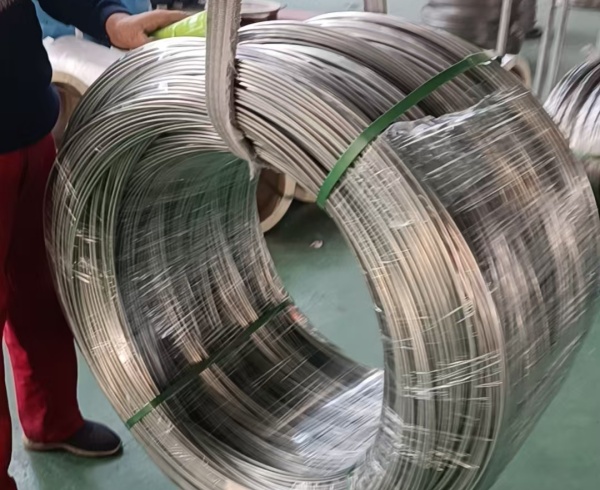
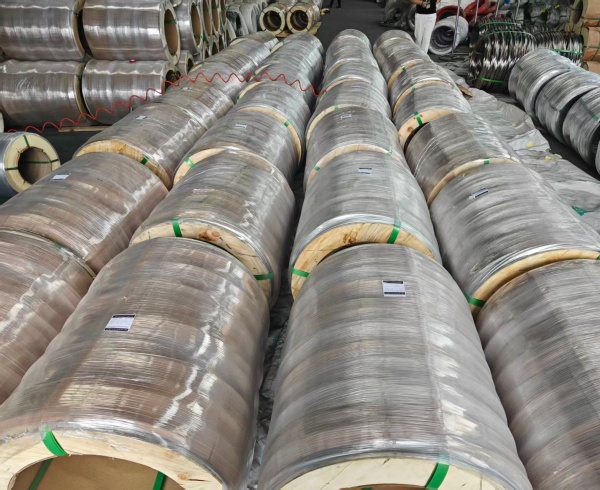
304HC3 is a custom copper-alloyed austenitic stainless steel specially developed for heavy cold heading & complex cold forming fastener production. “HC” stands for Cold Heading, the suffix “3” represents its highest copper content (2.5–3.5% Cu) among the 304HC series (HC1/HC2/HC3). On the basis of standard 18-8 304, controlled copper addition drastically reduces cold work hardening rate, greatly improves ductility and deep formability, eliminates cracking during large deformation cold forging, lowers die wear, and keeps weak magnetism after cold processing.
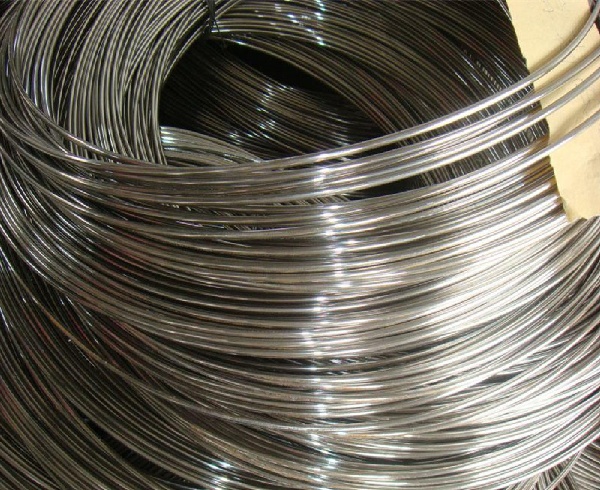
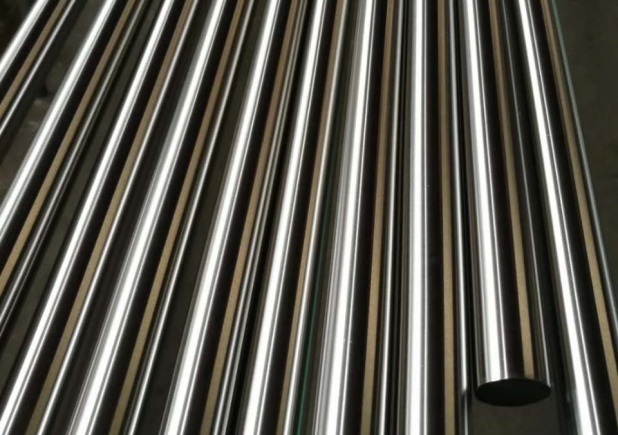
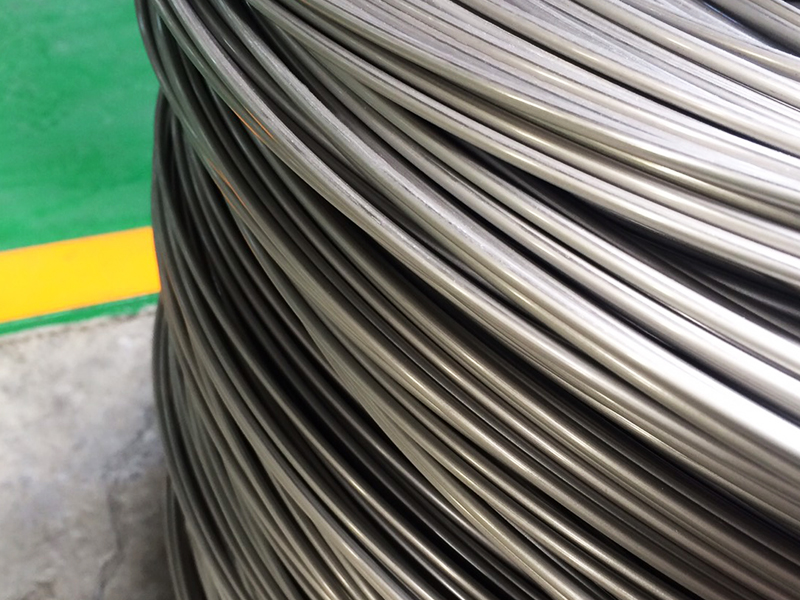
It is mostly supplied as bright cold drawn wire, rod, pickled bar with oxalic acid lubricant coating, widely used for high-complexity stainless steel screws, bolts, rivets, nuts, self-tapping screws and precision cold-forged parts. It is the premium choice for fasteners requiring big head upsetting, thin wall extrusion and low magnetic demand.
2. Global Equivalent Grades & Standard Matching
304HC3 is a domestic custom fastener special grade, no identical unified international standard grade; it belongs to copper-containing SUS304Cu alloy system.
| Standard System | Equivalent Grade Mark | Standard Code | Remark |
| China GB Enterprise Standard | 04Cr19Ni9Cu4 / 304HC3 | Q/YT 102-2019, GB/T 4356 | Domestic cold heading wire special enterprise standard |
| Japan JIS | SUS304Cu (equivalent substitute) | JIS G4314 | General copper-bearing 304 cold heading wire |
| US UNS | No direct match; UNS S30400 modified with Cu | ASTM A555 | Custom modified 304 wire for fasteners |
| European EN | X5CrNi18-10 + Cu alloy custom grade | EN 10270-3 | Non-standard modified austenite wire |
Key Note: 304HC3 is not a universal standard grade, it is a factory optimized copper-alloy 304 variant exclusively for cold heading industry; customers requiring international standard certification can adopt SUS304Cu as interchangeable alternative.
3. Chemical Composition (wt%, Factory Standard Range for 304HC3)
| Element | C | Si | Mn | P | S | Cr | Ni | Cu | N | Fe |
| Limit Value | ≤0.08 | ≤1.00 | ≤2.00 | ≤0.045 | ≤0.030 | 18.00–20.00 | 8.00–10.00 | 2.50–3.50 | ≤0.10 | Balance |
Core Composition Advantages
Controlled low carbon (C ≤0.08%): Avoid chromium carbide precipitation, prevent intergranular corrosion after welding or long-term service.
18–20% Chromium: Form dense passive film, provide standard atmospheric & fresh water corrosion resistance, salt spray ≥48h raw material, ≥500h after passivation.
8–10% Nickel: Stabilize full austenite matrix, maintain ultra-high ductility, guarantee non-magnetic performance in annealed state.
High copper content (2.5–3.5% Cu, core feature of HC3):
Slow down cold work hardening speed significantly;
Improve plastic flow during upsetting, greatly reduce head cracking, burst and scrap rate;
Reduce magnetism after cold forming compared to standard 304 & low copper HC1/HC2;
Lower friction coefficient, extend cold heading die service life.
Strict low sulfur & phosphorus control (S ≤0.03%): Avoid hot cracking during cold extrusion and thread rolling.
4. Physical & Mechanical Properties
4.1 Basic Physical Properties (Room Temperature, Annealed State)
Density: 7.93 g/cm³
Melting range: 1398–1454 ℃
Thermal conductivity: 16.1 W/m·K
Specific heat capacity: 500 J/kg·K
Resistivity: 0.74 Ω·mm²/m
Linear expansion coefficient (20–200℃): 17.1 ×10⁻⁶ /℃
Elastic Modulus E: 192 GPa
Shear Modulus G: 71 GPa
Poisson’s Ratio: 0.24
Magnetism: Fully non-magnetic after solution annealing; extremely weak magnetism after heavy cold heading (far lower than plain 304)
4.2 Mechanical Properties (Fully Annealed Cold Heading Blank State)
| Performance Index | Standard Minimum Value |
| Tensile Strength | 520–620 MPa |
| 0.2% Offset Yield Strength | ≥210 MPa |
| Elongation (50mm gauge length) | ≥45% (Higher than standard 304 40%) |
| Reduction of Area | ≥65% |
| Max Brinell Hardness HB | ≤195 HB |
●Cold Drawn Semi-Finished Mechanical Range (For Different Cold Work Rates)
●Light drawing (small deformation): Tensile 700–900 MPa
●Medium drawing: Tensile 900–1200 MPa
●Heavy drawing (spring pre-hardened): Tensile 1200–1400 MPa
●Performance Feature
Compared with standard 304, 304HC3 has much higher elongation and section shrinkage; its slow hardening characteristic allows multiple continuous upsetting without intermediate annealing, suitable for multi-station complex cold forming machines.
5. Product Specifications & Surface Finishes
5.1 Size Range
Product Forms: Cold heading wire, solid round bar, straight rod
Wire Diameter: 0.8 mm – 26.0 mm
Round Bar Diameter: 3.0 mm – 60 mm
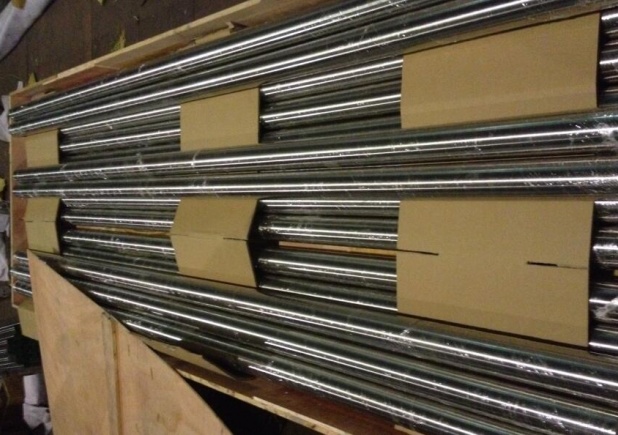
Standard Length: 6000mm straight bar; wire packed in coil/spool
Dimensional Tolerance:
Oxalic acid bright cold drawn wire: ±0.01 ~ ±0.03mm
Pickled black bar: ±0.2 ~ ±0.8mm
5.2 Common Surface Treatments for Cold Heading
Oxalic Acid Coated Bright Surface (Most Popular Export Grade) Uniform lubrication film, ultra-smooth surface, excellent lubricity during cold heading, minimize die scratch, no secondary cleaning required before forming.
Pickled Matte Silver Surface Removed oxide skin, low cost, for simple small fasteners with low surface requirement.
Soap Film Lubricated Surface General cold drawing lubricant, for medium-deformation standard screws.
Mirror Polished Surface For visible decorative fasteners with high appearance demand.
6. Core Key Features of 304HC3
Superior Heavy Cold Forming Performance (Core Advantage) Highest copper content among HC series, minimal cold hardening rate, resistant to head burst, crack and folding during large upsetting, perfect for deep extrusion, thin wall rivets, big round head screws.
Weak Residual Magnetism After Cold Working Cu element suppresses martensite transformation during deformation; ideal for electronic, communication, precision instrument fasteners with non-magnetic requirement.
Stable Corrosion Resistance Same 18Cr-8Ni base as standard 304, excellent rust-proof in indoor, outdoor atmospheric, fresh water and mild food acid-base environments.
Long Die Service Life Copper reduces friction between material and mold, cutting mold loss by 20–40% compared with plain 304, lowering production cost.
Excellent Thread Rolling Performance High ductility avoids thread crack, smooth thread surface, stable torque performance of finished fasteners.
RoHS & Food Grade Compliant Low harmful heavy metal content, pass EU environmental inspection, applicable for food machinery, kitchen hardware fasteners.
Good Weldability Low carbon design prevents weld intergranular corrosion, can be welded after cold forming without annealing treatment.
7. Typical Applications
7.1 Precision Stainless Steel Fasteners (Main Application)
Complex large-head screws, flange bolts, thin wall hollow rivets, blind rivets
Self-tapping screws, machine screws, lock nuts, miniature electronic fasteners
Multi-station cold forged special shaped connecting pins
7.2 Electronic & Communication Industry
Mobile phone shell screws, battery contact rivets, connector fixing bolts, precision instrument non-magnetic fasteners, sensor small pins.
7.3 Automotive Hardware
Auto interior decoration fasteners, engine auxiliary small bolts, new energy vehicle battery module rivets, chassis anti-rust connecting parts.
7.4 Food Machinery & Kitchen Sanitary Hardware
Food processing equipment fixing screws, stainless kitchen hinge rivets, water tank assembly fasteners, beverage production line connecting bolts.
7.5 Construction & Outdoor Engineering
Outdoor curtain wall small fasteners, stainless handrail rivets, landscape equipment anti-rust bolts, furniture decorative connecting pieces.
7.6 Precision Mechanical Equipment
Automation fixture pins, miniature hydraulic valve core blanks, small cold-forged elastic positioning parts.
8. Grade Comparison: 304HC3 VS 304HC2 VS 304HC1 VS Standard 304
| Grade | Cu Content | Cold Formability | Post-Heading Magnetism | Main Usage |
| 304HC3 | 2.5–3.5% | Best (no crack for heavy upsetting) | Weakest | Complex rivets, big head screws, electronic non-magnetic fasteners |
| 304HC2 | 1.5–2.5% | Very Good | Low | Medium deformation standard bolts & nuts |
| 304HC1 | 0.8–1.5% | Good | Slight | Ordinary small screws, low cost fasteners |
| 304 | <0.5% | Poor (easy head crack) | Obvious magnetism after cold working | Simple thin deformation parts, no complex cold forging |
9. Usage Notes
Corrosion limitation: Same as standard 304, not suitable for long-term immersion in seawater, salt spray or high chloride environment; select 316 cold heading wire for coastal & marine projects.
Magnetism explanation: Slight magnetism after cold upsetting is normal physical phenomenon caused by tiny martensite phase; demagnetization heat treatment can be supplied if zero-magnetism is required.
Heat treatment suggestion: For products with multi-pass heavy cold forming, intermediate soft annealing (1050–1100℃ water quenching) can further reduce forming stress.
Temperature limit: Continuous working temperature ≤600℃; long-term high temperature will reduce copper alloy ductility and corrosion resistance.
Welding reminder: After welding thick fasteners, passivation treatment is recommended to restore full anti-rust performance.
10. Executive Standards & Export Certifications
Enterprise special standard: Q/YT 102-2019 Stainless Steel Cold Heading Wire
Reference universal standards: GB/T 4356, ASTM A555, JIS G4314
Available test documents: MTC material test report, SGS third-party composition inspection, RoHS environmental certificate, food grade safety test report, fully meet global fastener export requirements.