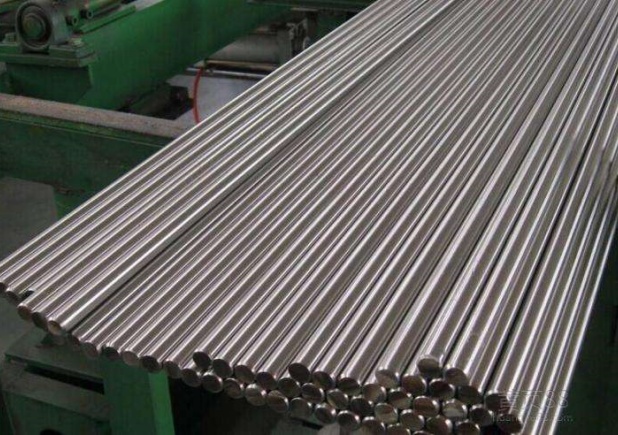
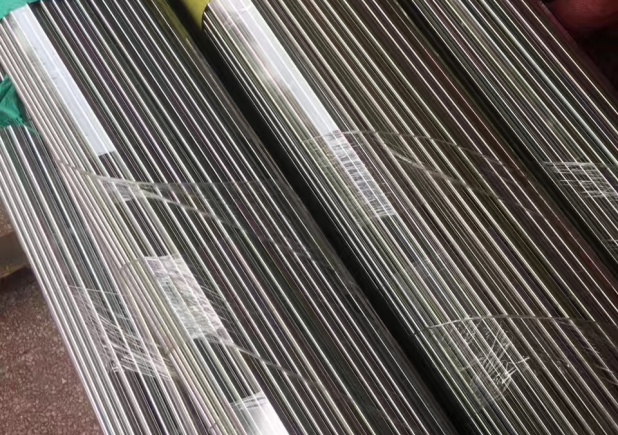
310S is a premium high-chromium high-nickel fully austenitic heat-resistant stainless steel round bar, the low-carbon variant of grade 310. The “S” stands for low carbon (C ≤0.08%), which effectively eliminates intergranular sensitization after welding and long-term high-temperature exposure.
With 24–26% Cr and 19–22% Ni, it forms a dense anti-oxidation chromium oxide film at extreme high temperatures, delivering outstanding oxidation resistance, high-temperature creep strength, thermal fatigue resistance and sulfidation resistance. It maintains stable mechanical performance under cyclic heating & cooling conditions, far superior to 304, 316 and 309S in high-temperature working environments.
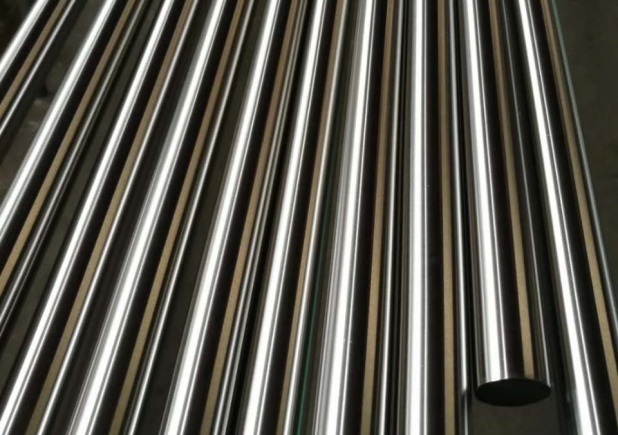
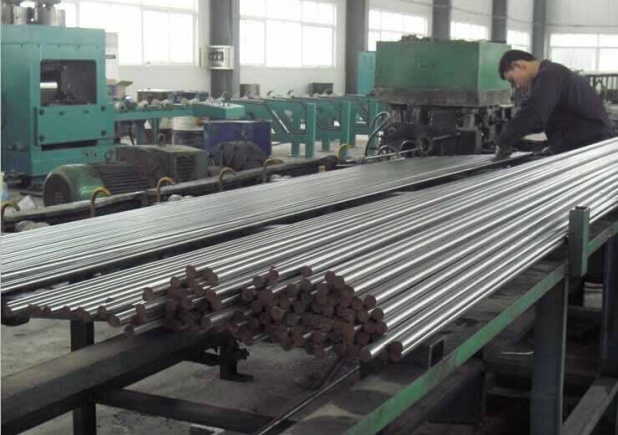
Manufactured via hot rolling, cold drawing, centerless grinding and solution annealing, solid round bars feature uniform dimensional tolerance, smooth surface and fully homogenized austenite microstructure. It supports cutting, drilling, bending, forging and all standard welding processes, widely applied in industrial furnaces, heat treatment equipment, petrochemical high-temperature pipelines, thermal power, kiln fixtures and high-temperature furnace structural components.
2. Global Equivalent Grade Cross Reference (All International Standards)
| Standard System | Full Grade Designation | Applicable Standard Code |
| USA (UNS/AISI/ASTM) | UNS S31008 / AISI 310S | ASTM A276, ASTM A479, ASTM A480 |
| Japan JIS | SUS310S | JIS G4303, JIS G4312 |
| European EN | X8CrNi25-21 / 1.4845 | EN 10088-3 |
| China GB | New: 06Cr25Ni20 / Old: 0Cr25Ni20 | GB/T 1220, GB/T 4238 |
| Swedish SS Standard | SS 2361 | SS 2361 |
| British BS | 310S31 | BS EN 10088 |
| French NF | Z8CN25-20 | NF A35-571 |
Remark: All above grades are fully interchangeable for high-temperature industrial use. The low-carbon limit (≤0.08%) is unified across all mainstream standards to avoid weld decay.
3. Chemical Composition (wt%, Standard Limit Range)
| Element | C | Si | Mn | P | S | Cr | Ni | Mo | Fe |
| Max/Min | ≤0.08 | ≤1.50 | ≤2.00 | ≤0.045 | ≤0.030 | 24.00–26.00 | 19.00–22.00 | ≤0.75 | Balance |
Core Composition Advantages
Ultra-low carbon (C ≤0.08%): Restrains chromium carbide precipitation between grain boundaries, prevents intergranular corrosion after welding or long service at 425–860℃ sensitization zone.
High chromium (24–26%): Generates compact, stable Cr₂O₃ protective film at high temperature, effectively blocks oxidation and surface scaling up to 1150℃ peak temperature.
High nickel (19–22%): Stabilizes full austenite matrix, maintains excellent toughness and low magnetism at room & cryogenic temperatures; improves creep resistance under sustained high-temperature load.
Controlled silicon addition: Further enhances high-temperature oxidation & sulfidation resistance.
Strict low sulfur & phosphorus: Eliminates hot cracking during high-temperature forging and welding.
4. Physical & Mechanical Properties
4.1 Basic Physical Properties (Room Temperature, Solution Annealed)
Density: 7.98 g/cm³
Melting range: 1398 ~ 1454 ℃
Thermal conductivity (20℃): 14.2 W/m·K
Specific heat capacity: 500 J/kg·K
Resistivity: 0.78 Ω·mm²/m
Linear thermal expansion coefficient (20–800℃): 17.5 ×10⁻⁶ /℃
Elastic Modulus E: 190 GPa
Shear Modulus G: 70 GPa
Poisson’s Ratio: 0.24
Magnetism: Completely non-magnetic after solution annealing; only negligible weak magnetism after heavy cold working
4.2 Room-Temperature Mechanical Properties (Fully Annealed State)
| Performance Index | Standard Minimum Value |
| Tensile Strength | ≥520 MPa |
| 0.2% Offset Yield Strength | ≥205 MPa |
| Elongation (50mm gauge length) | ≥40% |
| Reduction of Area | ≥50% |
| Max Brinell Hardness HB | ≤187 HB |
4.3 Key High-Temperature Mechanical Feature (Core Advantage)
Continuous oxidation resistance in clean air: 1050℃ long-term stable service; intermittent peak temperature up to 1150℃
Good creep rupture strength under sustained high-temperature load; retains structural rigidity in cyclic heating-cooling environments
Excellent thermal fatigue resistance, less prone to cracking under frequent temperature fluctuation
5. Product Specifications & Surface Finishes
5.1 Size Range
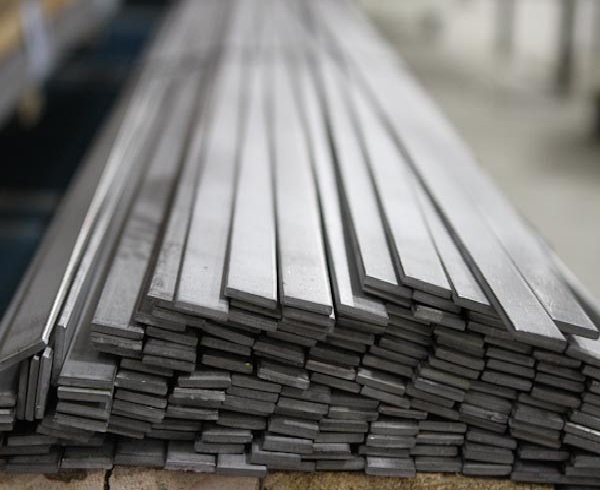
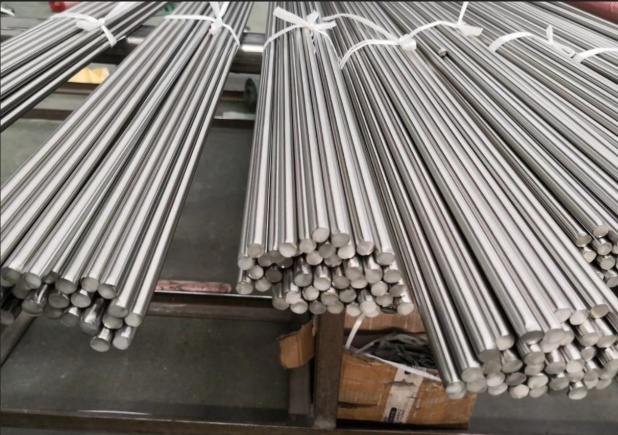
Product Form: Solid round bar, straight rod, hot rolled black bar, cold drawn bright bar, centerless ground precision bar
Diameter range: 3.0mm ~ 300mm; custom special diameters available
Standard length: 6000mm; custom fixed-length cutting service supported
Dimensional Tolerance: Hot rolled black bar: ±0.4~±1.2mm Cold drawn bright bar: ±0.02~±0.05mm Precision ground bar: ±0.005~±0.01mm
5.2 Common Surface Types
Hot Rolled Black Oxide Surface Low cost, thick oxide skin, for hidden heavy-load furnace structural supports without appearance requirements.
Pickled Matte Silver Surface Oxide layer fully removed, uniform silver-gray surface, easy for welding, machining and secondary heat treatment (most mainstream export grade).
Cold Drawn Bright Surface Smooth metallic finish, tight dimensional tolerance, for precision high-temperature shafts and fixture pins.
Mirror Ground Surface Ultra-smooth mirror finish, for high-end visible high-temperature equipment accessories.
6. Core Key Features
Outstanding Ultra-High Temperature Oxidation Resistance 25Cr-20Ni alloy system forms self-repairing anti-scaling film, far superior to 309S, 316 and 304; suitable for long-term furnace, heating tube and burner components.
Excellent Sulfidation & Carburization Resistance Works stably in low-sulfur flue gas, nitriding, carburizing and heat treatment atmosphere without rapid surface corrosion.
Low Carbon Anti-Sensitization Performance Avoids grain boundary corrosion after repeated welding and long-term high-temperature holding, no need post-weld solution annealing for most projects.
Superior Thermal Fatigue & Creep Resistance Resists deformation and fracture under long-time constant load at 800–1050℃, ideal for furnace brackets, trays and hanging fixtures.
Full Austenite Non-Magnetic Performance Zero magnetism after annealing, applicable for high-temperature precision electronic and sensor structural parts.
Good Machinability & Weldability Compatible with TIG, MIG, arc, laser welding; ductile enough for forging, bending and deep forming without cracking.
Cryogenic Toughness Maintains high impact toughness down to -270℃, can be used for ultra-low temperature equipment components.
7. Typical Applications
7.1 Industrial Furnace & Heat Treatment Equipment (Main Application)
Furnace roller shafts, furnace support brackets, heat treatment fixture pins, annealing tray hangers, furnace door frames, burner nozzles, muffle furnace internal structural rods, quenching furnace transmission shafts.
7.2 Petrochemical & Thermal Power Industry
High-temperature furnace tube supports, boiler internal hanging rods, flue gas pipeline fixing bars, refinery heating equipment components, sulfur recovery device structural parts, power plant high-temperature boiler accessories.
7.3 Metallurgy & Heat Processing
Sintering furnace brackets, continuous casting equipment high-temperature pins, metal heating furnace frames, annealing furnace charging fixture blanks.
7.4 Food & Ceramic Kiln Industry
Ceramic firing kiln support rods, food baking oven high-temperature brackets, glass melting furnace auxiliary structural parts.
7.5 Aerospace & High-Temperature Precision Equipment
High-temperature test fixture shafts, thermal processing equipment positioning pins, furnace temperature sensor mounting rods.
7.6 Environmental Protection Waste Incineration Equipment
Incinerator internal supports, flue high-temperature fixing bars, waste heat recovery furnace structural components.
8. Grade Comparison: 310S VS 310 VS 309S VS 304
| Grade | Carbon Content | Cr+Ni Content | Max Continuous Service Temp | Anti-Oxidation Performance | Core Application |
| 310S (1.4845) | ≤0.08% | 25Cr-20Ni | 1050℃ | Excellent | High-temperature furnace, frequent welding parts |
| 310 (S31000) | ≤0.25% | 25Cr-20Ni | 1050℃ | Excellent | High creep demand, low welding frequency equipment |
| 309S (1.4833) | ≤0.08% | 23Cr-13Ni | 900℃ | Good | Medium-temperature heating equipment |
| 304 (1.4301) | ≤0.08% | 18Cr-8Ni | 600℃ | Poor | Normal room-temperature & low-temperature structures |
9. Usage Notes
Sulfur environment limitation: If sulfur content in flue gas exceeds 2g/m³, maximum continuous service temperature shall be reduced to ≤950℃ to prevent sulfidation corrosion.
Not suitable for long-term chloride-containing wet environment (seawater, salt spray); select 316L for normal atmospheric anti-rust scenarios.
Long-term holding at 650–950℃ will generate brittle sigma phase; solution annealing at 1030–1180℃ with rapid water cooling can restore full ductility if required.
Welding matching: Use E310 / ER310 welding consumables; post-weld pickling passivation is recommended to recover high-temperature oxidation resistance.
Avoid sustained load above 1050℃: High-temperature creep strength drops sharply, leading to permanent deformation and failure.
10. Executive Standards & Export Certifications
Compliant with ASTM A276, ASTM A479, EN 10088-3, JIS G4303, GB/T 1220. Available export documents: MTC material test certificate, SGS third-party composition inspection, RoHS environmental compliance report, factory high-temperature performance test report, fully meet global high-temperature equipment procurement standards.