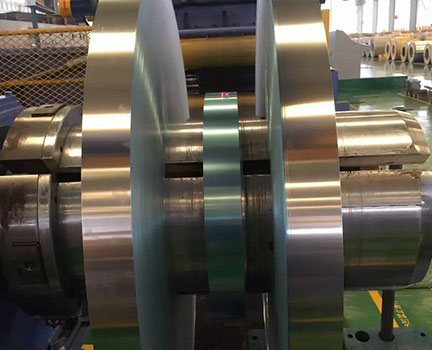
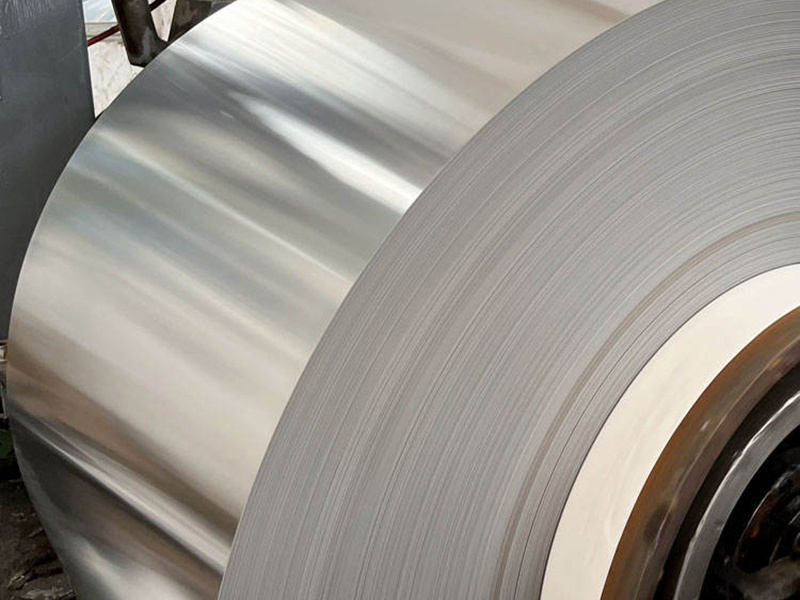
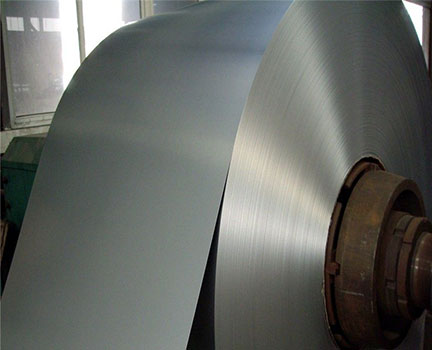
316 stainless steel foil is an ultra-thin rolled austenitic stainless steel strip with molybdenum alloy element, widely defined as thickness ≤0.15mm ultra-thin sheet material. Compared with 304 foil, 316 contains molybdenum, which greatly improves resistance to chloride ion, pitting corrosion, acid and alkali corrosion.
It is manufactured by multi-pass precision cold rolling, bright annealing, surface finishing and slitting, featuring ultra-thin uniform thickness, flat surface, tiny dimensional tolerance, excellent flexibility, foldability and weldability. It can be die-cut, etched, stamped, bent and laminated. The material retains stable corrosion resistance in salt fog, coastal, chemical and marine environments, and has outstanding high & low temperature stability. It is widely used in electronics, chemical shielding, medical instruments, battery, aerospace, lab equipment and anti-corrosion sealing fields.
2. Global Equivalent Grade Cross Reference (All Mainstream Standards)
| Standard System | Grade Designation | Applicable Standard Code |
| USA (UNS/ASTM) | UNS S31600 / AISI 316 | ASTM A240, ASTM A666 |
| Japan JIS | SUS316 | JIS G4305, JIS G4306 |
| European EN | X5CrNiMo17-12-2 / 1.4401 | EN 10088-2 |
| China GB | 06Cr17Ni12Mo2 | GB/T 3280, GB/T 4238 |
| British BS | 316S33 | BS EN 10088 |
| French NF | Z6CND17-12 | NF A35-571 |
| Swedish SS | SS2347 | SS Standard 2347 |
| Russian GOST | 08Х17Н13М2 | GOST 5632 |
Remark: All grades are interchangeable for general industrial foil applications. 316L (S31603 / 1.4404) is low-carbon derivative for heavy welding scenarios.
3. Chemical Composition (wt%, Standard Range)
| Element | C | Si | Mn | P | S | Cr | Ni | Mo | N | Fe |
| Limit | ≤0.08 | ≤1.00 | ≤2.00 | ≤0.045 | ≤0.030 | 16.00–18.50 | 10.00–14.00 | 2.00–3.00 | ≤0.10 | Balance |
Core Composition Advantages:
●Molybdenum (2.0~3.0%) core alloy feature: Resists chloride ion erosion, pitting and crevice corrosion, far superior anti-salt-spray performance than 304 foil.
●16–18.5% Chromium: Forms dense passive film for oxidation and rust resistance in atmospheric & fresh water environments.
●10–14% Nickel: Stabilizes full austenite matrix, delivers ultra-high flexibility for repeated folding without cracking.
●Carbon ≤0.08%: Balances cost and anti-sensitization performance; choose 316L foil if frequent welding is required.
●Strict low S & P: Avoids micro-cracks during ultra-thin cold rolling and precision etching processing.
4. Physical & Mechanical Properties
4.1 Basic Physical Properties (Room Temperature, Soft Annealed Foil)
Density: 7.98 g/cm³
Melting range: 1370 ~ 1400 ℃
Thermal conductivity: 15.9 W/m·K
Specific heat capacity: 500 J/kg·K
Resistivity: 0.74 Ω·mm²/m
Linear expansion coefficient (20–200℃): 16.0 ×10⁻⁶ /℃
Elastic Modulus E: 193 GPa
Shear Modulus G: 71 GPa
Poisson’s Ratio: 0.24
Magnetism: Non-magnetic after bright annealing; slight weak magnetism after hard rolling & stamping
4.2 Mechanical Properties (Two Common States: Soft Annealed / Hard Rolled)
Soft Annealed State (Most used for folding, etching, deep forming)
| Performance Index | Standard Value |
| Tensile Strength | 485–600 MPa |
| 0.2% Yield Strength | ≥170 MPa |
| Elongation | ≥40% |
| Max HB Hardness | ≤207 HB |
5. Product Specifications & Surface Finishes
5.1 Size Range
●Thickness: 0.005mm ~ 0.15mm (standard foil range; ultra-thin 0.003mm available on custom order)
●Width: 10mm ~ 600mm; slitting into narrow strips as required
●Form: Coil foil, cut sheet foil, precision slit narrow tape
●Thickness Tolerance: ±0.0005 ~ ±0.003mm (ultra-precision rolling control)
●Length: Unlimited coil length; custom fixed sheet cutting available
5.2 Surface Types
2B Bright Annealed Surface (Mainstream Export Grade) Uniform silver matte finish, flat surface, excellent etching performance, good flexibility for bending & stamping.
BA Mirror Bright Surface High gloss mirror surface, clean without defects, for decorative shielding and high-end electronic components.
Polished Surface Ultra-smooth polished finish, low surface roughness, for precision lab and medical accessories.
6. Core Key Features
Superior Chloride Corrosion Resistance Molybdenum alloy structure withstands salt spray, coastal humidity, seawater mist, mild acid and alkali liquid; 3–5 times longer service life than 304 foil in corrosive environments.
Ultra-Thin & Excellent Flexibility Micro thickness enables repeated folding, winding, bending without cracking; suitable for flexible sealing and ultra-thin shielding parts.
High Precision Dimensional Consistency Stable thickness tolerance, uniform flatness, ideal for chemical etching, laser cutting and precision die-cutting.
Excellent Electromagnetic Shielding Property High metal conductivity, effectively blocks electromagnetic interference for electronic communication devices.
Wide Temperature Adaptability No deformation or embrittlement under cryogenic and medium-high temperature working conditions.
Sanitary & Biocompatible Non-toxic, corrosion-resistant to body fluid, compliant with medical and food contact standards.
Good Weldability & Processability Compatible with micro laser welding, TIG spot welding; easy etching, punching, laminating and compounding.
7. Typical Applications
7.1 Electronic & Communication Industry (Largest Application)
EMI shielding foil for mobile phones, tablets, precision sensors; battery flexible connecting sheets, lithium battery sealing foils, electronic internal insulation shielding layers, watch internal thin components.
7.2 Medical & Laboratory Equipment
Medical instrument thin sealing gaskets, disposable medical tool blanks, lab anti-corrosion reaction vessel lining foil, chemical test sample thin sheets, dental equipment thin elastic sheets.
7.3 Chemical, Environmental & Marine Industry
Anti-corrosion lining foil for small chemical containers, seawater test equipment thin partitions, salt spray test chamber internal shielding sheets, waste gas filter thin metal layers.
7.4 Aerospace & New Energy
Aerospace lightweight thin sealing components, solar equipment anti-corrosion protective foil, fuel cell thin conductive sheets, thermal insulation wrapping foil.
7.5 Precision Etching & Hardware Accessories
Etched ultra-thin metal mesh, miniature filter sheets, precision thin shims, micro spring blanks, thin decorative metal strips.
7.6 Sealing & Thermal Insulation Fields
Ultra-thin corrosion-resistant gaskets, pipeline anti-corrosion wrapping foil, equipment thermal insulation metal cladding foil.
8. Grade Comparison: 316 Foil VS 316L Foil VS 304 Foil VS 301 Foil
| Grade | Carbon | Mo Content | Chloride Resistance | Weld Corrosion Resistance | Core Usage |
| 316 (1.4401) | ≤0.08% | 2~3% | Excellent | Good | General etching, shielding, low welding frequency |
| 316L (1.4404) | ≤0.03% | 2~3% | Excellent | Best | Micro laser welding, long-term corrosive environment |
| 304 (1.4301) | ≤0.08% | 0 | Poor | Good | Indoor non-salt electronic shielding, low cost demand |
| 301 | 0.08~0.12% | 0 | Poor | General | High-strength thin elastic sheets, low anti-corrosion requirement |
9. Usage Notes
Not suitable for long-term immersion in concentrated brine, strong oxidizing acid; choose Hastelloy series for heavy corrosion media.
Hard rolled foil has low elongation, avoid repeated sharp bending; select soft annealed grade for folding and deep forming.
Slight magnetism after cold rolling is normal and does not affect shielding & corrosion performance; demagnetization annealing available if non-magnetic required.
Continuous working temperature should not exceed 600℃; long-term high temperature causes surface oxidation and performance decline.
After laser micro-welding for medical/chemical parts, passivation treatment is recommended to restore full anti-corrosion performance.
10. Executive Standards & Export Certifications
Compliant with ASTM A240, ASTM A666, EN 10088-2, JIS G4305, GB/T 3280. Available supporting documents: MTC material test certificate, SGS third-party composition inspection, medical biocompatibility test report, salt spray test report, fully meet global electronic, medical and chemical export standards.