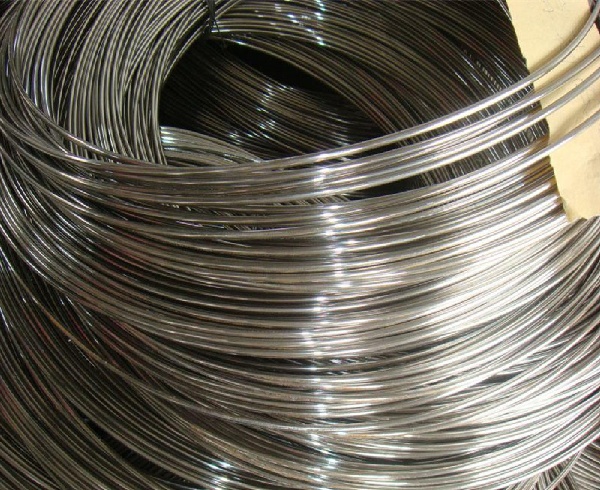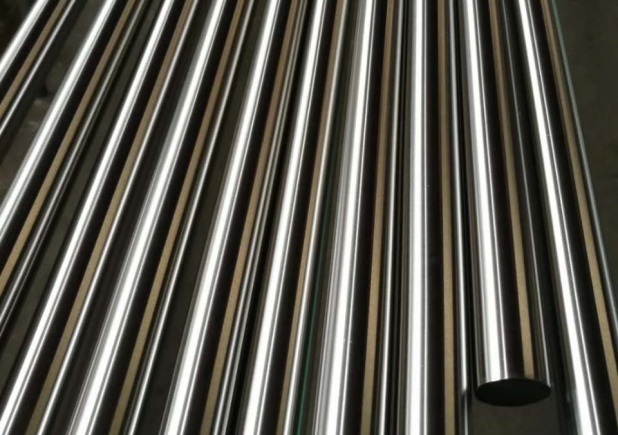
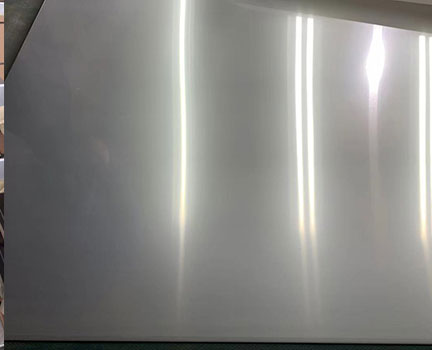
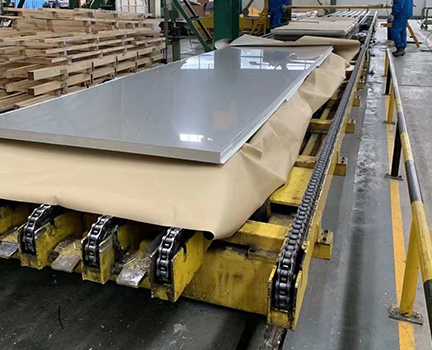
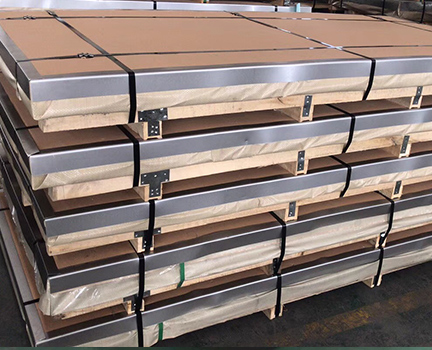
Grade 409 ferritic stainless steel (UNS S40900) is a nickel-free, titanium-stabilized stainless steel designed for medium-low temperature exhaust and mild high-temperature structural parts. It features low thermal expansion, superior thermal conductivity and affordable raw material cost. It is widely produced as hot rolled and cold rolled plates, coils and sheets for automotive, mechanical ventilation and general high-temperature industries.
2. Chemical Composition (ASTM A240, wt%, maximum unless minimum specified)
| Element | Content Range | Metallurgical Function |
| Carbon (C) | ≤0.08% | Improves room-temperature strength; excess C forms chromium carbide after welding and causes intergranular corrosion |
| Silicon (Si) | ≤1.00% | Boosts high-temperature oxidation resistance, improves fluidity during stamping |
| Manganese (Mn) | ≤1.00% | Deoxidizer for molten steel; slight effect on corrosion resistance |
| Phosphorus (P) | ≤0.040% | Harmful impurity; high P reduces ductility and weld toughness |
| Sulfur (S) | ≤0.030% | Triggers hot cracking during welding and bending |
| Chromium (Cr) | 10.50 ~ 11.75% | Core anti-corrosion element; forms passive oxide film for mild atmospheric oxidation resistance |
| Titanium (Ti) | ≥ 8 × (C + N) | Stabilizing element; binds carbon and nitrogen to avoid chromium depletion at grain boundaries |
| Nitrogen (N) | ≤0.040% | Raises tensile strength; high N weakens titanium stabilization effect |
| Nickel (Ni) | ≤0.50% | Only residual trace impurity, no intentional nickel addition to control cost |
3. Equivalent Grades Across Global Standards
| Standard System | Grade Designation | Remark |
| ASTM / UNS (USA) | S40900 / Type 409 | Original standard grade, mainstream for global trade |
| EN European Standard | X6CrTi12 / 1.4512 | EU equivalent for automotive exhaust components |
| JIS Japanese Standard | SUH409 | Used for Japanese auto and machinery exhaust parts |
| GB Chinese National Standard | 06Cr11Ti | Domestic Chinese equivalent of 409 stainless steel |
| ISO Standard | X6CrTi11 | International unified material marking |
4. Mechanical & Physical Properties (Fully Annealed Condition)
4.1 Mechanical Performance
| Index | Standard Value | Practical Characteristic |
| Minimum Tensile Strength | 415 MPa | Sufficient structural strength for low-load high-temperature housings |
| Minimum Yield Strength | 205 MPa | Higher yield strength than 409L, limited deep drawing capacity |
| Minimum Elongation | 20% | Supports simple bending, roll forming and shallow stamping |
| Max Hardness (HRB) | 88 HRB | Soft annealed matrix, easy cutting, punching and machining |
| Low-Temperature Toughness | Poor ductility below 0℃ | Not recommended for cold outdoor structural components |
4.2 Fundamental Physical Properties
Density: 7.80 g/cm³
Thermal Conductivity (100℃): 25.4 W/m·K, much higher than 304 austenitic stainless steel, excellent heat dissipation
Linear Thermal Expansion Coefficient (20–100℃): 11.0 ×10⁻⁶ /℃, low thermal deformation under cyclic temperature changes
Melting Range: 1430 ℃ ~ 1460 ℃
Magnetism: Fully ferromagnetic, separable via magnetic sorting equipment
Continuous Service Temperature Limit: Stable long-term use ≤650℃; severe scaling above 700℃
4.3 Processing & Welding Properties
Weldability: Moderate performance. Without post-weld annealing, the heat-affected zone may develop slight intergranular corrosion.
Formability: Suitable for simple bending and shallow drawing; easy cracking during complex ultra-deep stamping.
Machinability: Good cutting performance in annealed state, lower processing cost than high-chromium ferritic stainless steel.
Heat Treatment: Only full annealing at 760–815 ℃ followed by air cooling; cannot be hardened via quenching or tempering.
5. Common Surface Finishes for 409 Stainless Steel Plate
5.1 Hot Rolled Plate Surfaces (Thickness: 3.0–14.0 mm)
No.1 Finish (Hot Rolled, Annealed & Pickled) Uniform matte silver-gray surface with oxide scale removed by acid pickling. Used as base material for secondary processing, non-decorative internal structural parts.
Unpickled Black Hot Rolled Surface Retains black oxide scale without pickling treatment, lowest cost. Only applied to hidden invisible components with no appearance requirements.
5.2 Cold Rolled Plate Surfaces (Thickness: 0.3–3.0 mm)
2B Finish (Standard Cold Rolled Surface) Dull uniform matte surface with excellent flatness, the most universal surface finish. Easy for painting, coating and secondary polishing. Used for most industrial structural shells.
2D Finish Lower gloss than 2B, superior scratch resistance, preferred for shallow deep drawing parts.
BA Bright Annealed Finish Semi-bright smooth surface formed under protective gas atmosphere. Used for visible exhaust casings requiring basic decorative effect.
No.4 Hairline Brushed Finish Continuous linear grain texture on 2B substrate. Applied to exposed equipment housings with delicate metal texture requirements.
6. Industrial Application Fields & Restrictions
6.1 Automotive & Construction Machinery Exhaust (Largest Consumption Field)
Applications: Automobile tailpipe outer shells, muffler casings, exhaust connecting pipes, agricultural machinery exhaust ducts, engineering equipment silencer housings
Limitation: Not suitable for vehicles running in coastal salt fog or areas with winter de-icing salt; rapid surface discoloration and rust spots will occur.
6.2 Industrial High-Temperature Flue & Ventilation Equipment
Applications: Low-temperature factory ventilation pipes, small boiler exhaust flues, waste gas pipelines operating below 600℃, thermal insulation outer cladding for heating devices
Advantage: Low thermal expansion prevents pipe cracking during repeated heating and cooling cycles.
6.3 General Indoor Low-Corrosion Structural Parts
Applications: Indoor metal support brackets, machinery safety guards, generator outer shells, temporary metal frames, dry-environment equipment cabinets
Restriction: Cannot contact fresh water, chemical liquid or outdoor coastal atmosphere.
6.4 Household Dry Heating Equipment Accessories
Applications: Low-cost oven internal supports, electric heater outer casings, ventilation fan housings, back plates of dry kitchen appliances
Feature: Balances heat resistance and material cost for indoor dry heating appliances.
7. Core Advantages
Nickel-free alloy design, significantly lower material cost than 304, 439 and 444 stainless steel grades.
High thermal conductivity and low thermal expansion, perfect for medium-low temperature heat dissipation exhaust components.
Titanium stabilizer reduces welding sensitization risk under mild service conditions.
Easy cutting, bending and shallow forming, reducing overall processing expenses.