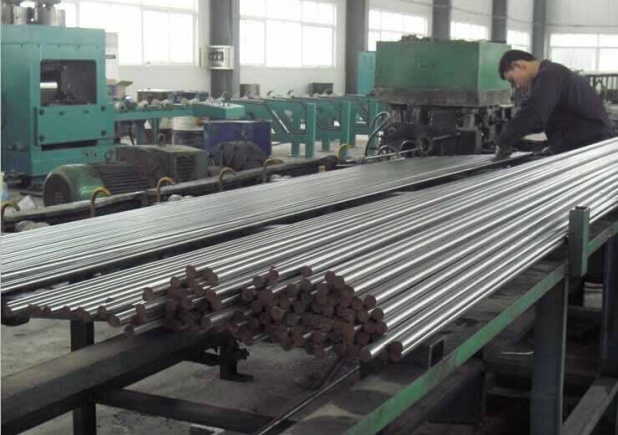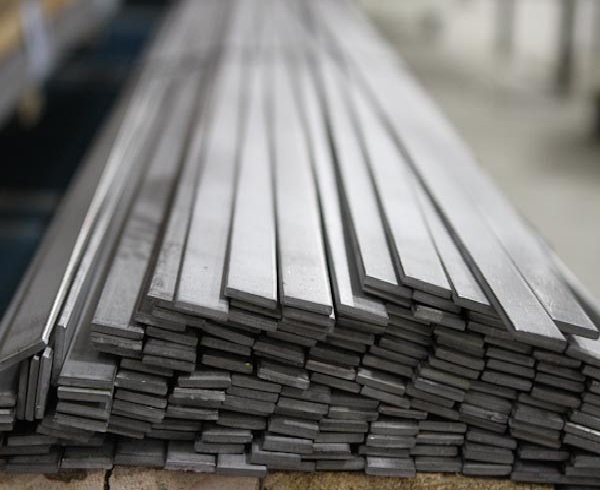
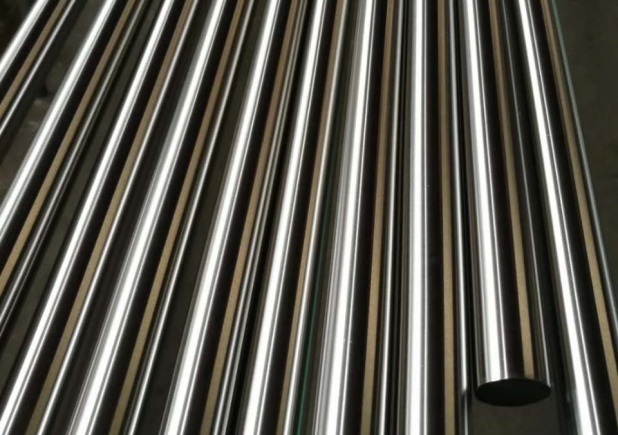
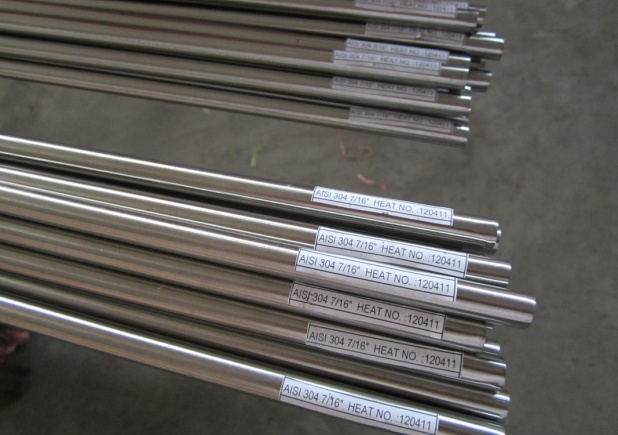
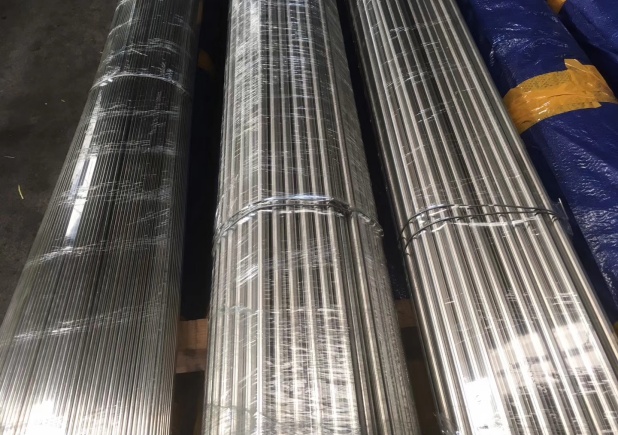
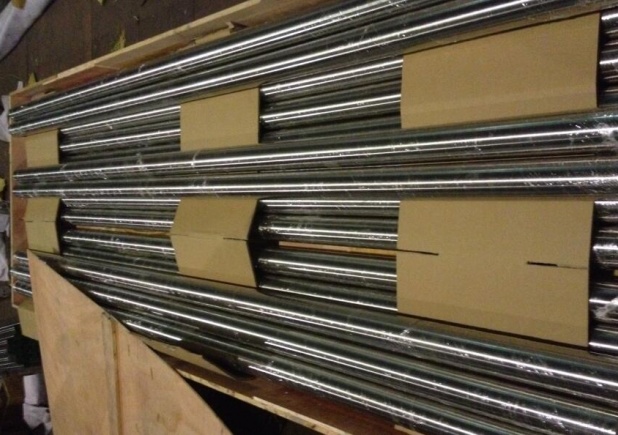
304 stainless steel round bar is the most widely used austenitic stainless steel solid bar. It adopts classic 18Cr-8Ni alloy design, featuring outstanding corrosion resistance, superior ductility, excellent weldability and machinability. Manufactured by hot rolling, cold drawing, centerless grinding and precision finishing, round bars have uniform circular tolerance, smooth surface and stable internal metallurgical structure.
It can be processed via turning, milling, drilling, tapping, bending, forging and welding, widely adopted in food equipment, medical machinery, chemical brackets, architectural hardware, automotive spare parts and general anti-rust structural components. All international equivalent grades have consistent core performance and can be mutually replaced for most industrial projects.
2. Global Equivalent Grade Table (Different Standards)
| Standard System | Grade Name | Standard Code |
| USA (UNS/AISI/ASTM) | UNS S30400 / AISI 304 | ASTM A276, ASTM A479 |
| Japan JIS | SUS304 | JIS G4303 |
| European EN | X5CrNi18-10 / 1.4301 | EN 10088-3 |
| China GB | New: 06Cr19Ni10 / Old: 0Cr18Ni9 | GB/T 1220 |
| British BS | 304S31 | BS EN 10088 |
| French NF | Z6CN18-09 | NF A35-571 |
| Swedish SS | SS2337 | SS Standard 2337 |
| Russian GOST | 08Х18Н10 | GOST 5632 |
Note: Minor differences in element tolerance among standards, no obvious impact on machining, corrosion resistance and service life for general use.
3. Chemical Composition (wt%, ASTM / EN / GB Standard Range)
| Element | C | Si | Mn | P | S | Cr | Ni | N | Fe |
| Limit | ≤0.08 | ≤1.00 | ≤2.00 | ≤0.045 | ≤0.030 | 18.00–20.00 | 8.00–10.50 | ≤0.10 | Balance |
Key Composition Advantages:
Low carbon content avoids intergranular corrosion after welding;
18% chromium forms dense passive anti-rust film on surface;
8% nickel stabilizes full austenite structure, delivers high toughness and non-magnetic property under annealed state;
Strict low sulfur & phosphorus control prevents cracking during cold forming and welding.
4. Physical & Mechanical Properties
4.1 Basic Physical Properties (Room Temperature)
Density: 7.93 g/cm³
Melting range: 1398 ~ 1454 ℃
Thermal conductivity: 16.2 W/m·K
Specific heat capacity: 500 J/kg·K
Resistivity: 0.72 Ω·mm²/m
Linear thermal expansion coefficient (20–200℃): 17.2 × 10⁻⁶ /℃
Elastic modulus E: 193 GPa
Shear modulus G: 72 GPa
Poisson’s ratio: 0.24
Magnetism: Fully non-magnetic after solution annealing; slightly weak magnetic after cold drawing/cutting
4.2 Mechanical Properties (Annealed Solution Treated State)
| Performance Index | Standard Minimum Value |
| Tensile Strength | ≥515 MPa |
| 0.2% Offset Yield Strength | ≥205 MPa |
| Elongation (Gauge 50mm) | ≥40% |
| Reduction of Area | ≥60% |
| Max Brinell Hardness HB | ≤201 HB |
| Max Rockwell Hardness HRB | ≤92 HRB |
Feature: High plasticity, no cracking during heavy cold processing; stable mechanical strength under long-term static load. Cold drawn bright bars have higher tensile strength and hardness for precision shaft parts.
5. Product Specifications & Surface Finishes
5.1 Size Range
●Diameter: 1.0mm ~ 300mm (custom special diameters available)
●Standard length: 3000mm / 6000mm; custom cut-to-length service supported
●Diameter tolerance: Hot rolled black bar: ±0.3~±1.0mm Cold drawn bright bar: ±0.02~±0.05mm Grinding precision bar: ±0.005~±0.01mm
5. 2 Common Surface Types
●Hot Rolled Black Surface: Black oxide skin, low cost, for rough structural parts
●Pickled Matte Surface: Silver grey, oxide removed, easy for machining & welding
●Cold Drawn Bright Surface: Smooth metallic finish, precise tolerance for standard shafts
●Centerless Ground Surface: Mirror bright, ultra-precise size for high-end precision equipment
6. Core Key Features
●Excellent Corrosion Resistance Resist rust, oxidation, fresh water, humidity and mild acid & alkali media; suitable for indoor & outdoor long-term service. Not fit for seawater or high chloride environment (choose 316 instead).
●Outstanding Machinability & Formability High toughness, support turning, tapping, milling, bending, stamping without fracture.
●Good Welding Performance Low carbon prevents welding seam corrosion; compatible with all stainless steel welding methods.
●Wide Temperature Adaptability Stable performance from -196℃ cryogenic condition to 800℃ high temperature.
●Sanitary & Harmless Food contact safe, no harmful substance precipitation, match food & medical production standards.
●Long Service Life & Low Maintenance Self-passivation anti-rust layer, no painting required, wear and aging resistant.
●Cost-Effective Universal Grade Better anti-rust performance than 200 series, cheaper than 316L, ideal general stainless solid bar.
7. Typical Applications
7.1 Food & Beverage Industry
Food machine shafts, mixing stirring rods, kitchen equipment frames, beverage pipeline fittings, sanitary fastener blanks.
7.2 Medical & Pharmaceutical Equipment
Medical instrument structural shafts, pharmaceutical production line brackets, surgical tool blanks, sanitary processing components.
7.3 Mechanical & Automation Equipment
Equipment transmission shafts, fixture pins, valve cores, pump shaft accessories, conveyor mechanical parts, robot structural pins.
7.4 Architectural & Decorative Hardware
Stainless handrail solid shafts, outdoor guardrail support rods, decorative hardware blanks, anti-corrosion construction fastener raw material.
7.5 Automotive & General Hardware
Auto sensor pins, engine auxiliary small shafts, bicycle spare parts, hardware tool blanks, bolts & nuts raw material.
7.6 Chemical, Water Treatment & Environmental Protection
Low-corrosion medium equipment support rods, sewage treatment equipment parts, mild chemical pipeline connecting shafts.
8. Grade Comparison: 304 / 304L / 316L / 201
| Grade | Carbon Content | Corrosion Resistance | Welding Performance | Main Usage |
| 304 (1.4301) | ≤0.08% | Excellent | Very Good | Universal structural & shaft parts |
| 304L (1.4307) | ≤0.03% | Better (anti-intergranular corrosion) | Best | Heavy welding & corrosive environment |
| 316L (1.4404) | ≤0.03% | Superior (anti-chloride) | Excellent | Seawater, salt spray, chemical medium |
| 201 | ≤0.15% | Poor | General | Low-cost indoor decorative parts only |
9. Usage Notes
Avoid long-term service in seawater, salt fog, bleach and strong chloride medium to prevent pitting corrosion; select 316L for such working conditions.
Cold processing (drawing, turning) will generate slight magnetism, which is normal physical property and does not affect mechanical performance; demagnetization treatment can be provided if non-magnetic requirement is needed.
For products requiring repeated welding and high anti-corrosion performance, 304L low-carbon grade is recommended to avoid weld intergranular corrosion.
Continuous working temperature shall not exceed 800℃ to prevent surface oxidation and performance decline.
10. Executive Standards & Certification
Compliant with ASTM A276, ASTM A479, EN 10088-3, JIS G4303, GB/T 1220, GOST 5632. Available test certificates: SGS inspection, RoHS compliance, food grade test, factory MTC material test report, fully meet global export standards.