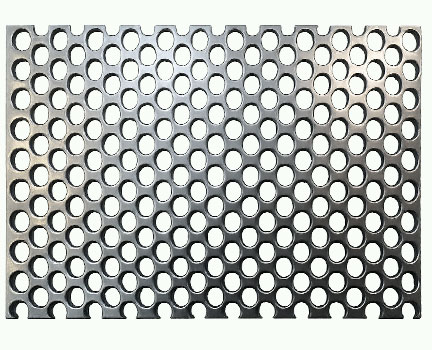
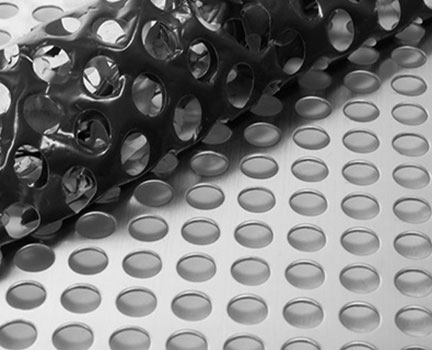
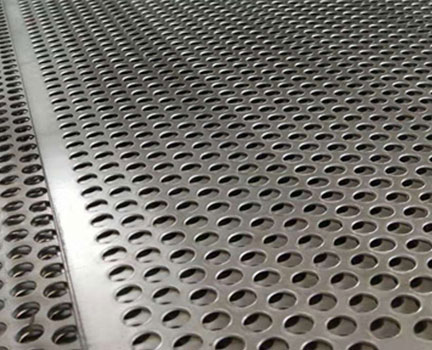
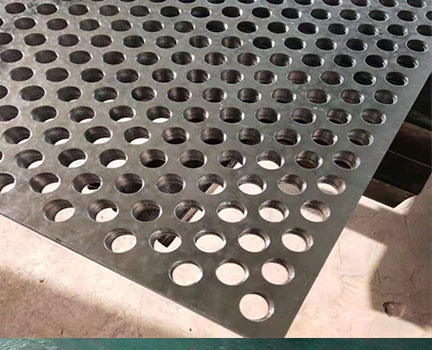
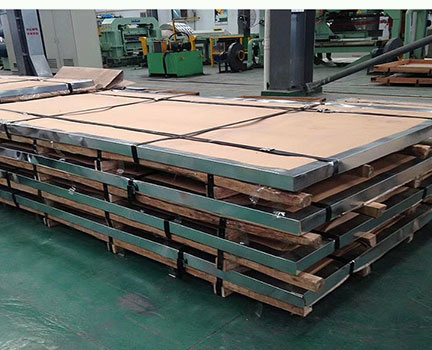
1. Regular Base Materials for Perforated Sheets
1.1 ASTM A36 Mild Carbon Steel
Chemical Composition (wt%)
C:0.12~0.22%, Si≤0.30%, Mn:0.30~0.70%, S≤0.050%, P≤0.045%, Fe balance.
Advantages
Lowest material cost; excellent ductility for punching, bending, welding and surface coating; abundant stock and fast lead time for mass production.
Applications
Indoor machinery protective screens, grain storage ventilation plates, indoor decorative backing boards, dry-condition filter supports. Extra paint or powder coating is required for anti-rust in humid environments.
1.2 Hot-Dip Galvanized Steel (HDG, substrate ASTM A36 with zinc coating 80~120g/㎡)
Composition
Base metal same as A36 surface covered with zinc protective layer.
Advantages
Zinc coating offers cathodic anti-corrosion protection, directly used outdoors without painting; superior rust resistance than bare carbon steel and much cheaper than stainless steel; flat surface with nice appearance against rain and moisture.
Applications
Building curtain wall panels, sound barrier for highway, outdoor guardrail, breeding cage base plate, ventilation grille, landscape decorative perforated sheet.
1.3 304 Stainless Steel (UNS S30400 / 1.4301)
Chemical Composition (wt%)
C≤0.08%, Si≤1.00%, Mn≤2.00%, Cr:18.0~20.0%, Ni:8.0~10.5%, S≤0.030%, P≤0.045%, Fe balance.
Advantages
Natural rust resistance against atmosphere, fresh water and mild acid without anti-corrosion finish; food-safe property and good high-temperature resistance; stable punching performance, service life 3~5 times longer than carbon steel.
Applications
Food processing sieve plate, water treatment filter sheet, kitchen ventilation panel, high-end indoor decorative cladding, chemical equipment partition, mechanical heat dissipation mesh.
1.4 316L Stainless Steel (UNS S31603 / 1.4404)
Chemical Composition (wt%)
C≤0.03%, Si≤1.00%, Mn≤2.00%, Cr:16.0~18.5%, Ni:10.0~14.0%, Mo:2.0~3.0%, S≤0.030%, P≤0.045%, Fe balance.
Advantages
Molybdenum added for outstanding chloride, seawater and coastal salt spray resistance; ultra-low carbon prevents intergranular corrosion after welding, durable under acid & alkaline chemical surroundings.
Applications
Offshore marine equipment, seawater filtering plates, chemical screening, pharmaceutical equipment, swimming pool accessories, salty wastewater treatment panels.
1.5 430 Ferritic Stainless Steel
Advantages
Nickel-free with lower cost than 304; magnetic and easy stamping; decent anti-rust for dry indoor environments.
Applications
Household appliance heat dissipation grilles, indoor low-cost decorative perforated sheets.
1.6 5052 Aluminum Alloy
Advantages
Ultra-light weight, inherent anti-oxidation and rust-free; easy bending, premium surface effect after anodizing.
Applications
Lightweight architectural ceiling, curtain wall decoration, equipment lightweight filter panels.
2. Production Process of Perforated Steel Sheet
- Uncoiling & Leveling: Steel coils are cut into flat sheets, degreased to remove oil and surface rust.
- Programming & Mold Preparation: Confirm hole shape (round, square, slotted), hole diameter and pitch; set CNC punching parameters and install customized dies.
- Punching Forming:
- Standard sheets: CNC turret punching for high efficiency and precise dimension;
- Thin gauge & irregular pattern: laser cutting;
- Heavy plate over 12mm: plasma or water jet cutting.
- Straightening & Deburring: Flatten deformed plates, polish sharp burrs around hole edges.
- Cut-to-size: Trim finished sheets into required dimensions via shearing or laser cutting.
- Surface Treatment as Required: Carbon steel: galvanizing / powder coating / painting; stainless steel: hairline or polishing; aluminum: anodizing & fluorocarbon coating.
- Final Inspection & Packing: Check aperture, open area and flatness before delivery.