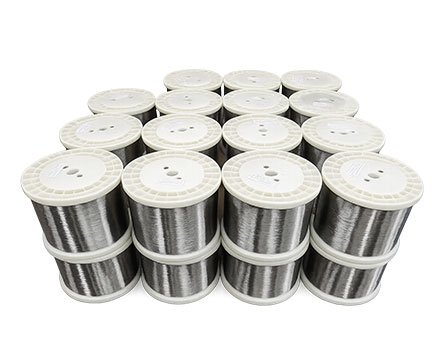
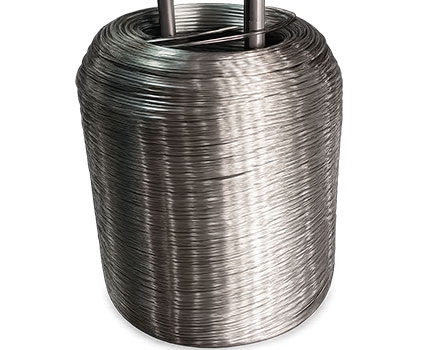
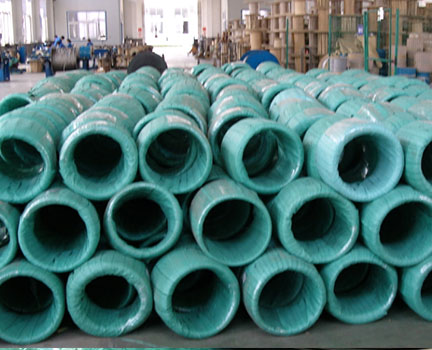
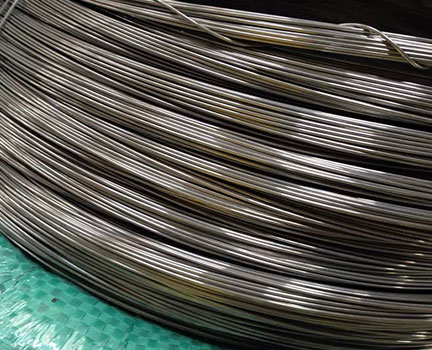
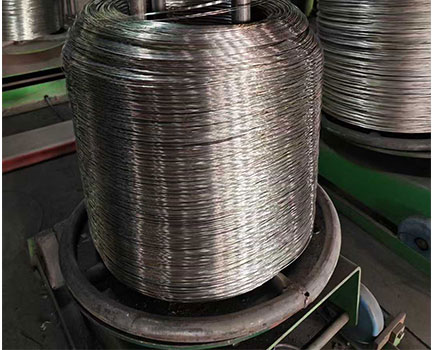
Ni80Cr20, commercially named Nichrome 80/20, is the most widely used nickel-chromium austenitic resistance heating alloy wire. Its nominal composition is 80wt% nickel and 20wt% chromium. It integrates high stable electrical resistivity, outstanding high-temperature oxidation resistance, excellent ductility and moderate corrosion resistance. A dense protective Cr₂O₃ oxide film forms spontaneously on its surface under high temperature, effectively blocking continuous oxidation and scaling. Supplied as solid round wire with diameters ranging from 0.01 mm to 8.0 mm, available in soft annealed (mainstream) and hard drawn tempers for heating elements, precision resistors, thermal processing and electronic components. Applicable global standards: ASTM B344, DIN 17470, GB/T 1234, JIS C2520, ISO 6035
2. Chemical Composition (Mass %, Max for impurities; Ni as balance)
| Element | Content Range | Metallurgical Function |
| Nickel (Ni) | Balance (~76.0–80.0%) | Matrix base element; provides high ductility, cold workability, high-temperature toughness and basic anti-corrosion performance |
| Chromium (Cr) | 19.0–21.0% | Core anti-oxidation element; generates compact Cr₂O₃ passivation film at high temperature, prevents matrix scaling |
| Silicon (Si) | 0.75–1.60% | Reinforces high-temperature oxidation resistance, improves wire drawing lubricity and creep strength |
| Manganese (Mn) | ≤1.00% | Deoxidizer during smelting; optimizes hot rolling and cold drawing processing performance |
| Carbon (C) | ≤0.08% | Excess carbon precipitates chromium carbide, weakens oxidation resistance and ductility; strictly limited |
| Iron (Fe) | ≤1.00% | Controlled residual impurity; high Fe reduces maximum service temperature |
| Copper (Cu) | ≤0.50% | Minor residual element, lowers resistivity stability |
| Aluminum (Al) | ≤0.30% | Auxiliary oxidation-resistant additive |
| Phosphorus (P) | ≤0.020% | Harmful impurity; reduces ductility and weld toughness |
| Sulfur (S) | ≤0.015% | Triggers hot cracking during wire drawing and welding |
| Rare Earth (RE) | 0.01–0.04% (optional grade) | Extend service life by inhibiting oxide film peeling at ultra-high temperature |
3. Equivalent Grades & Brand Designations Worldwide
3.1 National Standard Unified Grades
| Standard System | Standard Grade Number | Material No./UNS Code |
| USA ASTM / UNS | Nichrome 80/20 | UNS N06003 |
| Germany DIN / EN | NiCr8020 | W.Nr. 2.4869 |
| China GB Standard | 6J20 | Cr20Ni80 |
| Japan JIS | NCHW-1 | GNC108 |
| ISO International Standard | NW6003 | NiCr20 |
| Russia GOST | X20H80-H | HX20 |
3.2 Famous Commercial Brand Equivalents
Sweden Kanthal: Nikrothal 80
France Resistohm: Resistohm 80
USA Alloy Wire: Tophet A
UK Braloy: Brightray C
France Ampere: Nichrome V
4. Physical & Mechanical Properties (Soft Fully Annealed Wire, Room Temperature 20℃)
4.1 Core Electrical Properties
Electrical Resistivity: 1.09–1.14 μΩ·m (1.09 Ω·mm²/m)
Temperature Coefficient of Resistance (20–100℃): 50 ×10⁻⁶ /K, ultra-stable resistance under temperature fluctuation
Max Continuous Operating Temperature in Dry Air: 1150–1200℃
Short-Term Peak Temperature Tolerance: 1250℃
Non-magnetic characteristic: Zero magnetism, no interference with precision instruments and electromagnetic equipment
4.2 Thermophysical Parameters
Density: 8.40 g/cm³
Melting Point Range: 1390–1405℃
Thermal Conductivity (20℃): 13.4–15.0 W/(m·K)
Average Linear Thermal Expansion Coefficient:
20–100℃: 13.0 ×10⁻⁶ /℃
20–1000℃: 16.0 ×10⁻⁶ /℃
Specific Heat Capacity: 0.46 J/(g·℃)
4.3 Mechanical Performance (Soft Annealed State)
| Mechanical Index | Standard Value | Practical Feature |
| Minimum Tensile Strength | 650 MPa | Balanced tensile strength for coil winding without breakage |
| Yield Strength | ~350 MPa | Low yield point for easy bending, looping and forming |
| Minimum Elongation Rate | ≥20% | Excellent cold plasticity; supports ultra-fine wire drawing and tight spiral winding |
| Vickers Hardness | 180–220 HV (HRB 65–75) | Moderate soft texture, easy cutting, stamping and welding |
| Elastic Modulus | 200 GPa | Good structural stability after repeated thermal cycles |
4.4 Processing & Welding Characteristics
Wire Drawability: Superior ductility; can be cold-drawn down to ultra-fine 0.01 mm micro-wire without intermediate annealing
Weldability: Excellent for spot welding, argon arc welding and silver brazing; no weld brittleness
Heat Treatment Rule: Only hydrogen-protected bright annealing at 900–1050℃ followed by slow cooling; cannot be quenched & hardened
Thermal Fatigue: Resists repeated heating-cooling cycles; Cr₂O₃ film rarely peels under long-term high temperature service
5. Common Surface Finishes of Ni80Cr20 Alloy Wire
5.1 Bright Hydrogen Annealed Surface (Most Popular)
Appearance: Uniform silver mirror semi-bright finish, clean oxide-free surface
Production Process: Annealed under pure hydrogen protective atmosphere after fine drawing
Advantages: Smooth surface, low friction during automatic winding, no surface oxide impurities
Applicable Scenarios: Precision electronic resistors, household appliance heating coils, woven nickel-chrome mesh, hot wire foam cutting wire, medical heating elements
5.2 Matte Oxidized Natural Surface
Appearance: Dull dark gray thin Cr₂O₃ passive film, matte non-reflective texture
Production Process: Air annealing without protective gas
Advantages: Pre-formed anti-oxidation layer, longer service life in industrial furnaces
Applicable Scenarios: Industrial box furnaces, muffle furnaces, bell annealing furnaces, large industrial heating tube coils
5.3 Black Pickled Surface
Appearance: Dark gray matte surface after acid pickling to remove thick oxide scale
Advantages: Lowest production cost, uniform rough surface
Limitation: Minor surface acid residue; not recommended for precision electronic products
Applicable Scenarios: Low-cost general industrial heating elements without high surface requirements
5.4 Polished Super-Bright Surface
Appearance: Mirror-level glossy finish via multi-pass fine polishing
Advantages: Ultra-clean surface for vacuum and high-precision equipment
Applicable Scenarios: Laboratory thermal analysis instruments, aerospace precision heating components, vacuum coating heating sources
6. Wide Application Fields & Usage Details
6.1 Household Electrical Heating Elements (Largest Consumption Field)
Electric oven heating coils, hair dryer heating wire, electric water heater cores, toaster heating strips, electric blanket heating wires, air conditioner auxiliary heating modules, ceramic heater resistance coils Advantage: Stable resistance, long service life, uniform heat output for daily low-to-medium temperature appliances.
6.2 Industrial Furnace & Thermal Treatment Equipment
Muffle furnaces, box annealing furnaces, continuous conveyor furnaces, metal heat treatment tempering furnaces, glass processing heating equipment, plastic thermoforming heating coils Service feature: Continuous operation at 1000–1100℃, anti-scaling film ensures thousands of hours of stable service without frequent replacement.
6.3 Precision Electronic & Electrical Resistors
Wire-wound precision resistors, current-limiting resistance coils, sensor thermal compensation wires, automotive electronic heating sensors Core merit: Non-magnetic, tiny resistance drift with temperature change, meets high precision circuit standards.
6.4 Hot Wire Cutting & Thermal Processing Tools
Foam cutting nichrome wire, plastic hot melting wire, packaging heat sealing wire, soldering iron heating cores Feature: Fast temperature rise, uniform heat distribution, easy to wind into custom shapes.
6.5 Special High-Temperature & Corrosion-Resistant Scenarios
Laboratory heating mantles, medical sterilization heating components, weak acid/alkali environment heating equipment, aerospace small heating elements Advantage: Better atmospheric, fresh water and weak chemical corrosion resistance than FeCrAl iron-chromium-aluminum alloy.
7. Core Advantages of Ni80Cr20 Alloy Wire
Ultra-stable electrical resistivity and low temperature coefficient, consistent heat output under variable temperature conditions
Excellent high-temperature oxidation resistance up to 1200℃, far superior to low-nickel Cr20Ni30 and Cr20Ni35 alloys
Outstanding ductility and cold workability, available in ultra-fine micro-wire specifications
Good weldability and thermal fatigue resistance, not easy to crack under repeated thermal cycles
Non-magnetic, compatible with precision electronic and magnetic-sensitive equipment
Moderate corrosion resistance against air, fresh water, sweat and weak acid/alkali media