
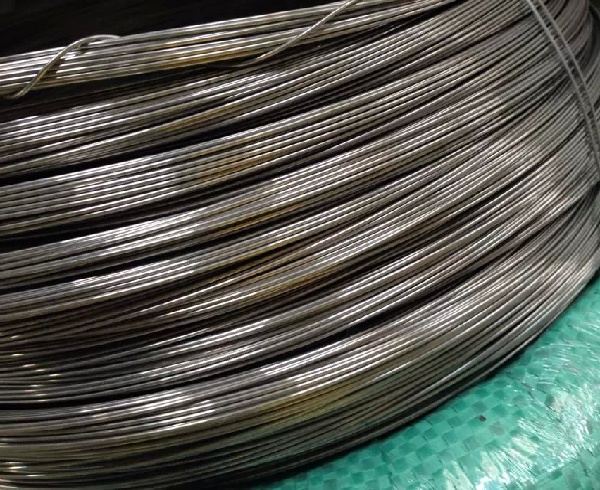
302 stainless steel spring wire (AISI 302 / SUS302 / EN 1.4310) is a high-carbon austenitic stainless steel specially optimized for spring manufacturing. Compared with 304 stainless steel, 302 features a higher carbon content, which delivers superior cold work hardening performance, ultra-high tensile strength, and stable elasticity. It balances excellent mechanical strength, good ductility, reliable corrosion resistance and fatigue resistance, making it the most cost-effective and widely used general-grade spring stainless steel wire for industrial, automotive, electronic and daily hardware applications.
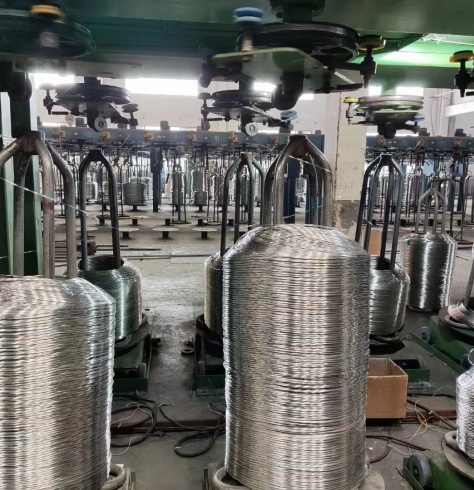
The wire is produced via multi-pass precision cold drawing process, with smooth and uniform surface, stable mechanical properties, and excellent formability for various compression, tension, torsion and special-shaped springs.
1. Chemical Composition (Standard: ASTM A313 / GB/T 4240, wt%)
| Element | C | Si | Mn | P | S | Cr | Ni | N | Fe |
| Specification | 0.08–0.15 | ≤1.00 | ≤2.00 | ≤0.045 | ≤0.030 | 17.00–19.00 | 8.00–10.00 | ≤0.11 | Balance |
Core Advantage: Higher carbon content ensures outstanding cold hardening effect, greatly improving tensile strength and spring fatigue life; standard 18-8 chromium-nickel composition guarantees stable corrosion resistance in atmospheric and general industrial environments.
2. Physical & Mechanical Properties
2.1 Basic Physical Properties (Room Temperature)
Density: 7.9 g/cm³
Melting Point: 1400–1450℃
Thermal Conductivity: 14.6 W/m·K
Specific Heat Capacity: 500 J/kg·K
Resistivity: 0.73 Ω·mm²/m
Linear Expansion Coefficient: 16.5×10⁻⁶ /℃ (20–200℃)
Elastic Modulus: 185–193 GPa
Shear Modulus: 71–73 GPa
Poisson’s Ratio: 0.25
Magnetism: Non-magnetic / slightly magnetic after cold working
2.2 Key Mechanical Properties (Cold Drawn State)
|
Wire Diameter
|
Tensile Strength (MPa)
|
Elongation (Min)
|
|---|---|---|
|
≤1.0 mm
|
2000 – 2500
|
2%–4%
|
|
1.0 – 5.0 mm
|
1500 – 2000
|
3%–5%
|
|
5.0 – 10.0 mm
|
1300 – 1500
|
≥5%
|
Performance Feature: High strength with reserved ductility, not easy to crack during spring coiling and bending; excellent fatigue resistance, stable elastic recovery after repeated compression and torsion.
3. Product Specifications & Surface Types
3.1 Size Range
Diameter: 0.10 mm – 10.0 mm (custom sizes available)
Standard Tolerance: ±0.01mm ~ ±0.03mm
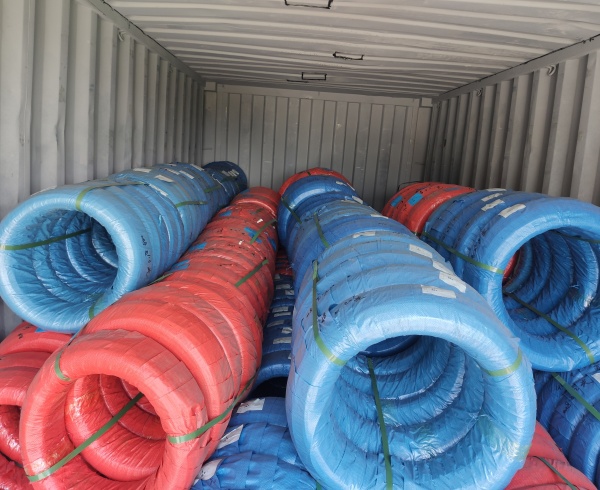
Package: Coil / spool / straight cut
3.2 Surface Conditions
Bright Surface: Mirror finish, no oxidation, clean surface, for high-precision springs
Soap-coated Surface: Good lubrication, easy forming, effective scratch resistance
Matte / Misty-gray Surface: Uniform texture, superior anti-rust performance
4. Core Key Features
Ultra-high Strength & Stable Elasticity: Excellent cold work hardening capacity, far higher tensile strength than 304 steel, maintains stable elasticity under long-term repeated loadExcellent Fatigue Resistance: Resists elastic fatigue and deformation after millions of times of compression, tension and torsion cycles
Good Corrosion Resistance: Resists oxidation, rust and corrosion in atmospheric, fresh water and mild acid-base environments
Superior Formability: Balanced strength and toughness, no cracking during coiling, bending and stamping
High Temperature Resistance: Stable performance under continuous working temperature ≤300℃Cost-Effective: Better mechanical performance than 304, more affordable than 316, ideal for general spring scenarios
5. Typical Applications
5.1 Spring Core Products
Compression springs, tension springs, torsion springs
Wave springs, circlips, snap rings, special-shaped elastic parts
5.2 Electronic & Electrical Industry
Battery contact springs, switch shrapnel, connector elastic components, precision instrument springs
5.3 Automotive & Mechanical Industry
Automotive seat springs, brake system elastic parts, transmission components, valve springs, machinery clamps
5.4 Daily Hardware & Medical Supplies
Stationery springs, hair clips, fishing gear parts, small medical instrument elastic components
5.5 Other Industrial Fields
Stainless steel woven mesh, fine steel wire rope, precision stamping elastic parts
6. Grade Comparison (302 VS 304 VS 301)
|
Grade
|
Tensile Strength
|
Toughness
|
Corrosion Resistance
|
Best Application
|
|---|---|---|---|---|
|
302 (1.4310)
|
Highest
|
Medium
|
Good
|
General high-strength springs
|
|
304 (1.4301)
|
Medium
|
High
|
Excellent
|
Corrosion-priority non-spring parts
|
|
301 (1.4305)
|
High
|
Medium-High
|
Good
|
Elastic shrapnel & thin wire parts
|
7. Usage Notes
Proper stress relief tempering (300–450℃) after spring forming can effectively improve fatigue life
Not suitable for long-term use in high-chloride environments (seawater, salt spray) to avoid pitting corrosion (choose 316 for such scenarios)
Slight magnetism after cold working is a normal physical phenomenon, demagnetization service is available if required
8. Production Standards & Certification
Compliant with ASTM A313, EN 10270-3, GB/T 4240; support SGS, RoHS environmental protection inspection and custom factory test reports.